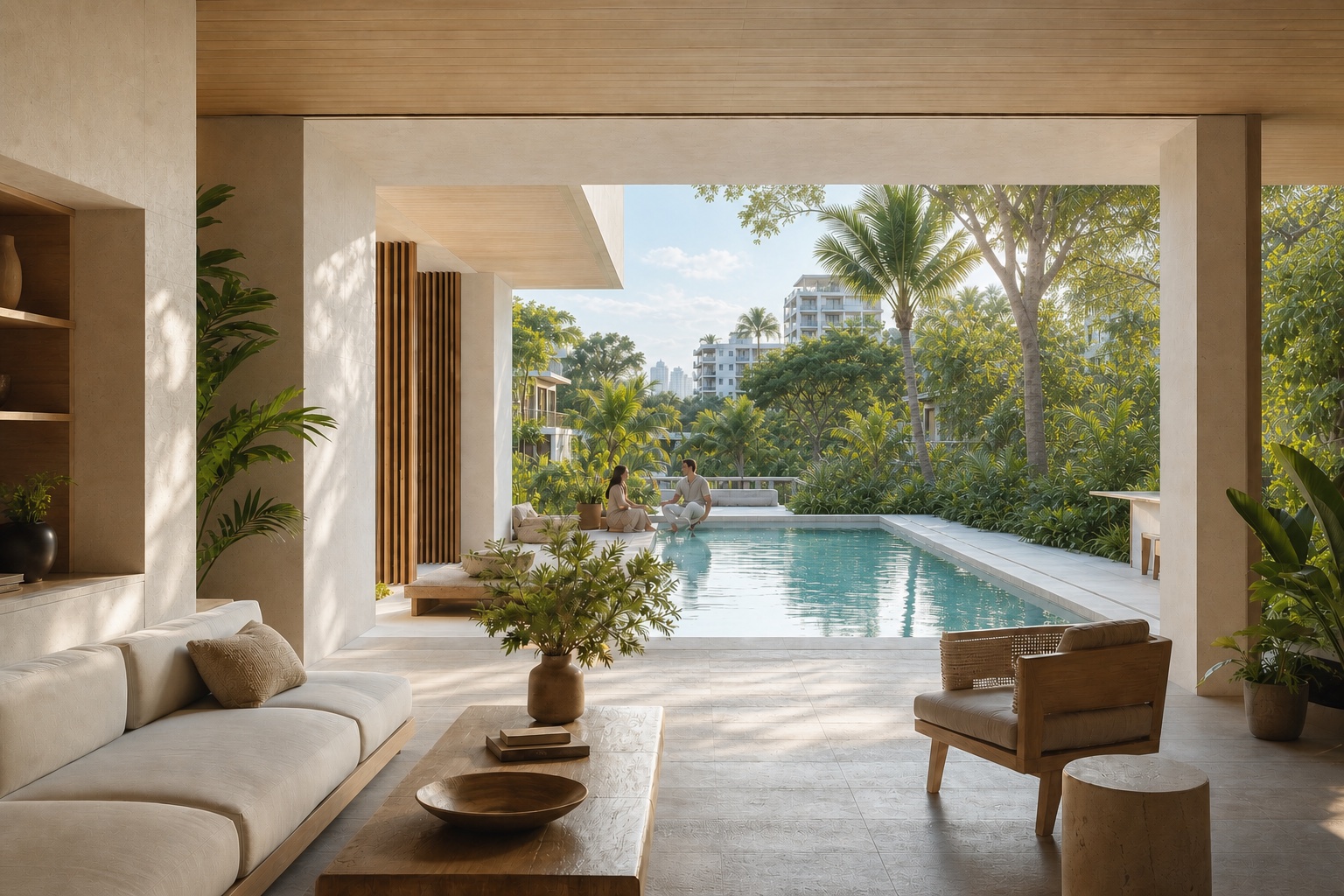
16 Jun Custom architecture in Miami: from design to interior design
Miami is not just a bustling city; it is an environment where architecture comes alive through light, local materials and a vision deeply connected to the identity of the place.
If you are looking to create a home that is truly yours, the role of the Miami interior architect is essential to ensure that every corner of your home speaks of you, your lifestyle and the unique experience you want to live.
In this blog we guide you through the entire process: from the initial architectural design to the interior design details that transform a space into a custom piece of work.
We’ll discuss how to integrate both disciplines from the start, avoid common mistakes and choose materials that work for Miami’s climate without compromising budget or aesthetics.
Get ready to discover how to achieve a coherent, unique and functional residential project in one of the most creative and demanding cities in the world.
Residential architecture in Miami: a unique context
Miami offers a unique setting for those who wish to build a home that combines distinction, functionality and a sense of place.
Residential architecture in this city does not respond to universal formulas, but requires a sensitive reading of the natural and cultural environment.
Every decision, from the orientation of spaces to the choice of materials or interior finishes, becomes a statement of identity and belonging.
Below, we explore two key factors that directly influence architectural design and interior architect work: local conditions and the growing demand for personalised luxury.
Climate, culture and local materials
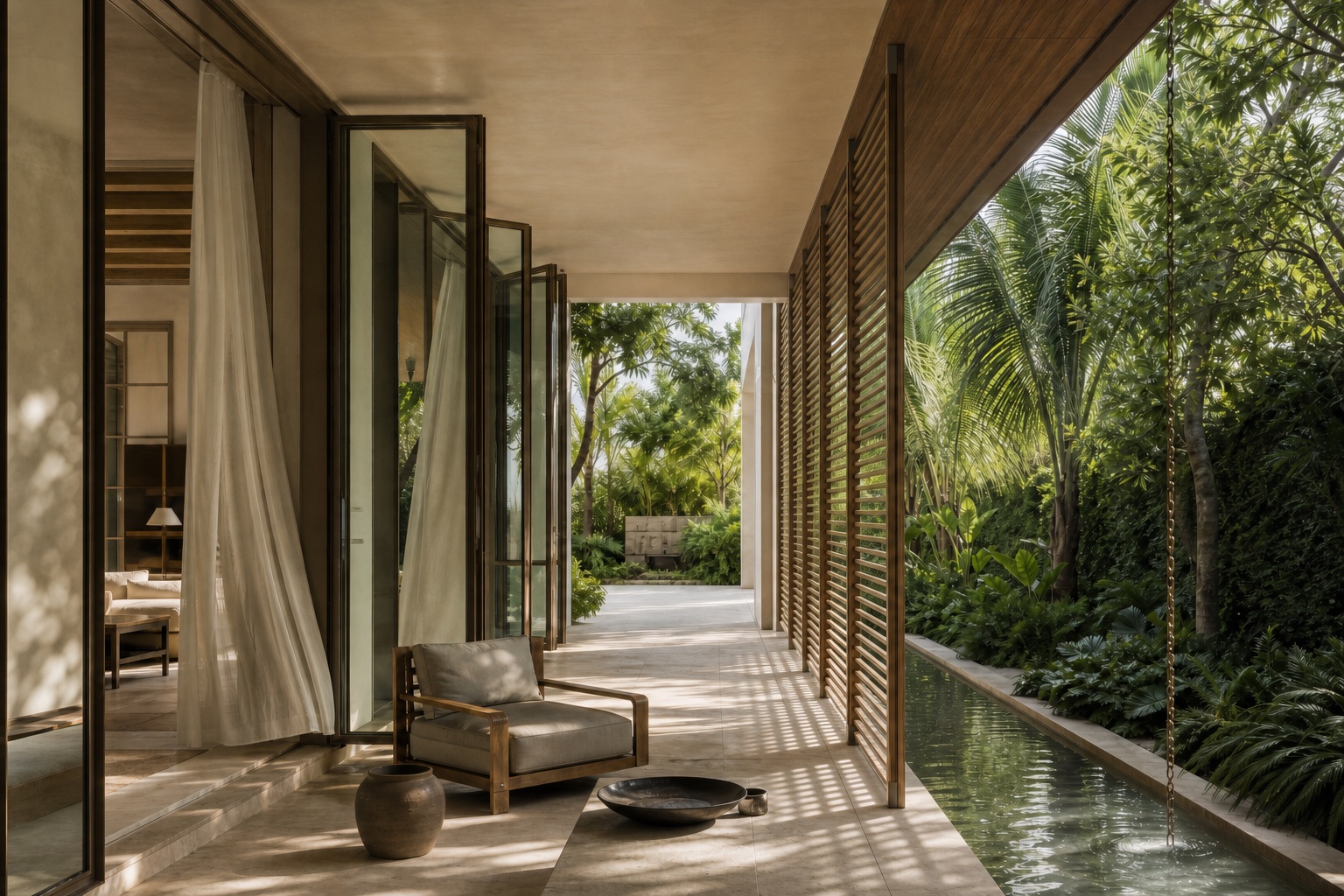
Designing a home in Miami is about much more than just space allocation; it is about understanding a very specific geographic, cultural and climatic environment. The heat, humidity and tropical rains demand resistant materials such as treated concrete, tropical woods and thermal cladding, which must be combined with cross-ventilation solutions and natural solar control.
But Miami’s architecture is also a reflection of its diversity: Latin, Caribbean, art deco and contemporary influences coexist in a style that demands personality. That is why a good interior architect will know how to translate these cultural and climatic factors into aesthetic and functional choices from the very first design.
Demand for customised luxury in residential areas
Miami homeowners and real estate investors are looking for more than just a house: they want a tailor-made experience. Neighbourhoods such as Coconut Grove, Coral Gables, Brickell and Pinecrest have a high demand for exclusive residences that integrate art, technology and comfort.
This public values uniqueness and expects impeccable execution. For this reason, personalisation goes beyond the furnishings: it begins with the architecture itself and is planned down to the last interior detail. This is where a holistic approach is required, where architecture and interior design develop as a single aesthetic language.
Tailor-made architectural design: beyond the technical plan
At Fernández Architecture we conceive each project as an architectural translation of our clients’ lifestyle. Designing a customised home is not only about drawing functional plans, but also about anticipating how each space will be experienced, how the light will flow, what emotions each material will evoke. It is an exercise in technical precision, but also in aesthetic empathy.
A bespoke design requires understanding the client’s personality, their routines, their aspirations, and projecting them into a structure that is as practical as it is meaningful. This vision is only possible when working with an integral philosophy, where architecture and interior design are thought of as a continuum, not as isolated parts.
The role of the residential architect in Miami
The residential architect in Miami has a responsibility that goes beyond structural design: he or she must be an interpreter of the environment and the client. In our studio, this role involves considering the subtropical climate, urban planning regulations, and above all, our clients’ desire to create something unique and lasting.
We work with demanding profiles that value exclusivity, but also the functional coherence of the project. Therefore, our approach always starts from the context, but is directed towards the end user’s experience. In this sense, every design decision – from the general volumetry to the type of ambient lighting – is designed to integrate with the future interior design.
Working models: from design to construction (‘design-build’)
One of the approaches that our clients value most is the ‘design-build’ model, which we apply in projects where a turnkey solution is required. This system allows us to take complete control of the process, from architectural conception to final execution, including interior design management.
The main benefit of this model is coherence. By unifying architecture and interior design under a single team, we avoid fragmentation, misunderstandings and unnecessary cost overruns. In addition, it allows a real optimisation of time and budget, without compromising the quality and personalisation of the final result.
Integrated interior design: how to create coherent spaces
At Fernández Architecture we maintain that true excellence in a residential project cannot be achieved if architecture and interior design are approached separately.
Both must dialogue from the beginning, sharing the same vision, rhythm and aesthetic language.
This integration not only generates more harmonious spaces, but also makes it possible to anticipate functional needs and enhance the user’s sensory experience in each environment.
It is not a matter of ‘decorating afterwards’, but of designing from the inside, understanding how each space will be experienced, what atmosphere is desired and what materials, textures or proportions are the most appropriate to achieve it.
Advantages of a joint approach between architecture and interior design
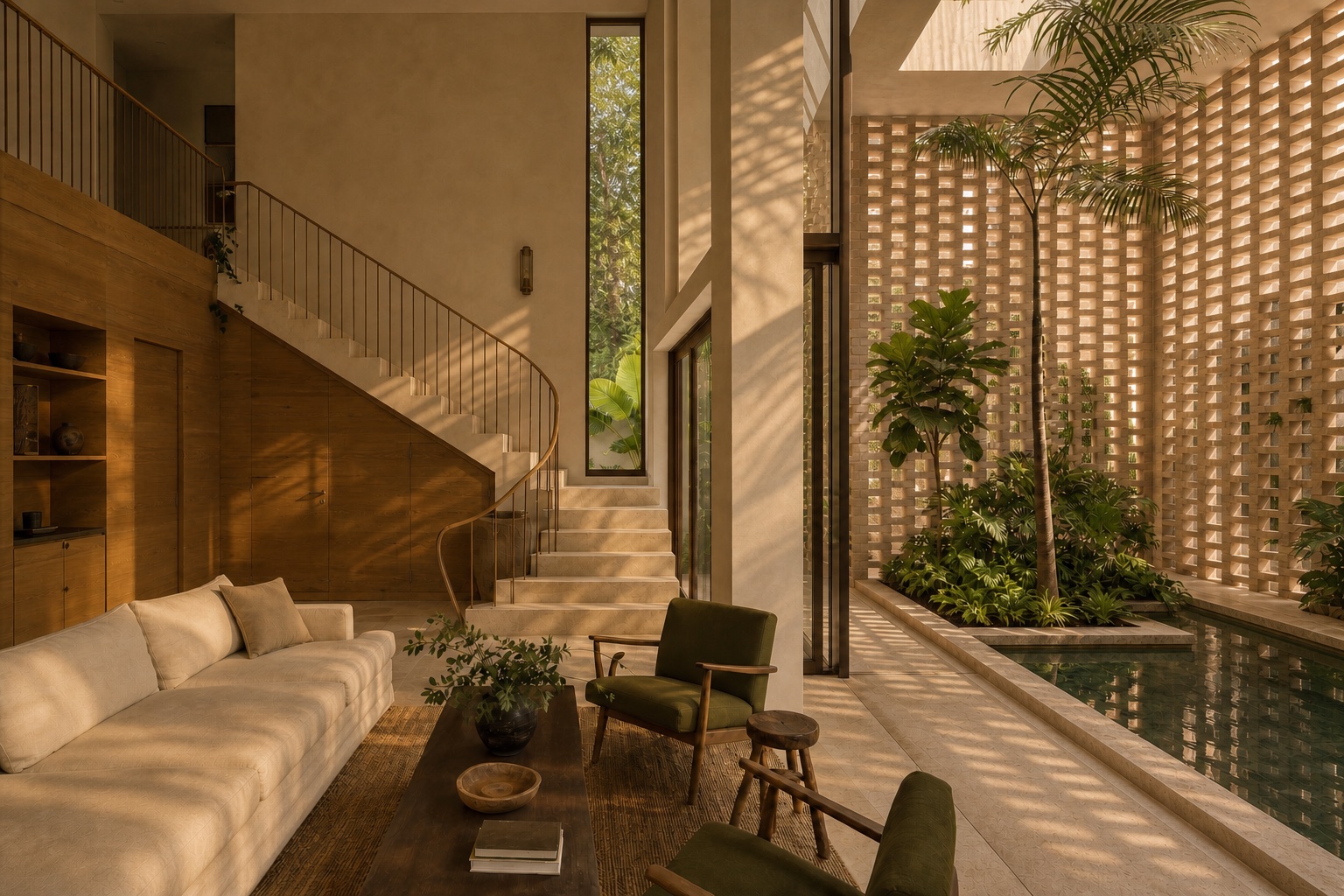
When interior design and architecture are designed in a unified way, the result is a space where everything makes sense: the natural lighting corresponds to the interior routes, the heights respond to the scale of the furniture and each element contributes to a coherent aesthetic narrative.
In our studio, this synergy translates into decisions such as integrating bespoke joinery from the structural design or providing indirect lighting solutions that highlight noble materials without altering their essence. Furthermore, working with a single team avoids duplication, reduces execution times and improves budget control.
The balance between functionality, aesthetics and spatial flow
One of the most common challenges in residential projects is to make the design functional without losing elegance. The spatial flow – that is, how the different rooms are connected – must feel natural, intuitive and comfortable. At Fernández Architecture, each floor plan is reviewed under this criterion: how it is lived in, how it is walked through and how it is perceived.
The furniture is not placed as an accessory at the back, but as part of the architecture. Textures, colours and finishes are chosen thinking about how they will coexist with natural light, with art, with daily life. This is how a coherent space is built: from the structure to the last detail.
Common cases of disconnection and how to avoid them
Unfortunately, in many projects, errors are perceived in the lack of integration. Ceilings that are too high without acoustic control, furniture that does not fit into the planned layout, poorly positioned light points or rooms without a visual hierarchy. These failures not only compromise not only the aesthetic result, but also the comfort and functionality of the space.
Our methodology avoids these problems by conceiving the project as a single spatial narrative. From the outset, interior design and architecture progress in parallel, feeding back and adjusting at each stage. It is this coherence that defines the quality of the design and client satisfaction.
Current interior design trends in Miami
Designing in Miami means anticipating the aesthetic and functional sensibilities of a city that is always changing.
At Fernández Architecture, we observe how the trends of 2026 go beyond the visual: they point to a more conscious relationship with the environment, the responsible use of materials and a search for authenticity through personalisation.
These trends do not dictate style, but enrich the narrative of each project.
Sustainable luxury and local craftsmanship
More and more clients are prioritising the use of sustainable, recyclable or low environmental impact materials, without sacrificing sophistication. From certified woods to natural mineral coatings, contemporary luxury lies in the honesty of the materials and the traceability of their origin.
In this context, we collaborate with local craftsmen to create unique pieces: bespoke joinery, lighting designed specifically for the project or hand-applied finishes. This handcrafted personalisation not only enhances the aesthetic value, but also adds soul and character to the home.
Integration of technology and 3D renderings
Realistic visualisation has become an essential tool for our clients. We use interactive 3D renderings from the early stages of the project to simulate finishes, layouts and atmospheres. This allows us to make informed decisions and adjust every detail before starting the execution.
We also integrate technological solutions that enhance the living experience: domotic lighting, efficient air conditioning, automated curtains and invisible sound systems, always discreetly integrated into the design.
Signed styles and cultural personalisation
The demand for signed styles -with a signature stamp- is growing in Miami. It is not about replicating catalogues, but about creating proposals that reflect the client’s DNA and dialogue with the culture of the place. In our architecture studio, we develop unique visual languages, inspired both by international references and by Miami’s history, art and light.
This cultural personalisation translates into colour palettes with local identity, integration of commissioned artworks and design of spaces intended to receive, exhibit, contemplate and dwell with depth.
Costs, planning and budget control in customised projects
At Fernández Architecture we know that the success of a residential project is not only measured by its aesthetic result, but also by clarity in planning and efficiency in resource management.
One of the client’s main fears is losing control of the budget; therefore, our methodology includes a detailed phase of economic forecasting from the first sketch.
Transparency, foresight and optimisation are the pillars with which we approach each phase of the process.
How an integral budget is structured (architecture + interior design)
A customised project involves simultaneously contemplating multiple items: architecture, interior design, technical management, furniture, special materials, made-to-measure carpentry, among others. Our approach consists of breaking down each of these areas from the outset, offering our clients a clear vision of the scope and potential cost at each stage.
This comprehensive budget allows us to prioritise, redeploy resources if necessary and avoid surprises during execution. In addition, we provide a contingency margin to cover unforeseen events without compromising quality or time.
Factors that raise or lower the final cost
The total cost of a custom home depends on multiple variables: floor area, level of customisation, quality of materials, integrated technological solutions, and even execution times.
Imported materials, unique or handcrafted pieces, and highly complex finishes can increase the investment. However, there are also smart strategies to optimise resources without sacrificing design: creative reuse, choice of local suppliers or technical adjustments in early design phases that reduce structural costs.
Tips to avoid financial deviations
- Clearly define the scope at the outset. Subsequent changes lead to adjustments that impact both the budget and deadlines.
- Coordinate architecture and interior design from the first phase. Avoid corrections that require rework or duplication of work.
- Require periodic schedules and reports. At Fernández Architecture we keep our clients informed of every decision that has an economic impact.
- Rely on a single team. When design and execution are unified, as in our design-build model, financial risks are minimised.
From the idea to the result: phases of a successful integral project
Every successful project begins with an idea, but it only becomes a reality when it is translated into an orderly, rigorous process with an integral vision. At Fernández Architecture we guide our clients through every step, ensuring that architecture and interior design evolve in parallel, with conceptual coherence, technical control and a strong emotional involvement on the part of those who will live there.
Initial briefing: defining needs and style
The first phase is the most critical: listening. We sit down with the client to understand their expectations, routines, aesthetic references, desired level of involvement and lifestyle. This exchange is captured in a functional and emotional briefing that will serve as a roadmap for the entire project.
At this stage we also define the indicative budget and estimated timescales, adjusting expectations from the outset with total transparency.
Simultaneous architectural development and interior design
From the very first architectural sketches, our interior design team actively collaborates. This allows us to envisage integrated solutions: embedded lighting, concealed storage spaces, flowing routes or structured furniture as part of the design.
The result: homes that do not need to be ‘decorated’ afterwards, but are born ready to be lived in with style and functionality. We consider this synchronicity to be a signature of Fernández Architecture.
Supervision, adjustments and final delivery
During the execution, we maintain continuous supervision to ensure that every decision made on paper is faithfully materialised. When unforeseen issues arise, our team resolves them with quick solutions that respect the original concept.
Finally, we accompany the client in the delivery of the project, ensuring that each space is ready to be lived in from day one. Our commitment does not end at the construction site: it continues with post-occupancy support to ensure that every detail is as planned.
Your home as an expression of identity: keys to personalise with meaning
At Fernández Architecture we understand that a signature home is not just an exercise in design, but a tangible expression of identity. Each client has a history, daily rituals, cultural and aesthetic references that deserve to be translated into architecture. We don’t design to impress; we design to reflect who you are, how you live and what you want your space to say about you.
How to translate your lifestyle into spatial choices
The way you live inspires us. That’s why we analyse habits, priorities and daily flows before proposing a layout. Do you work from home? Do you frequently receive visitors? Do you prefer open spaces or intimate nooks and crannies? Each answer leads us to design spaces that not only look good, but work and feel like your own.
This personalisation includes everything from the choice of general layout to small gestures: a gallery for art, an open kitchen for informal gatherings, a dressing room with scenic lighting. Everything speaks of you, if it is well designed.
Materials, furniture and finishes with intention
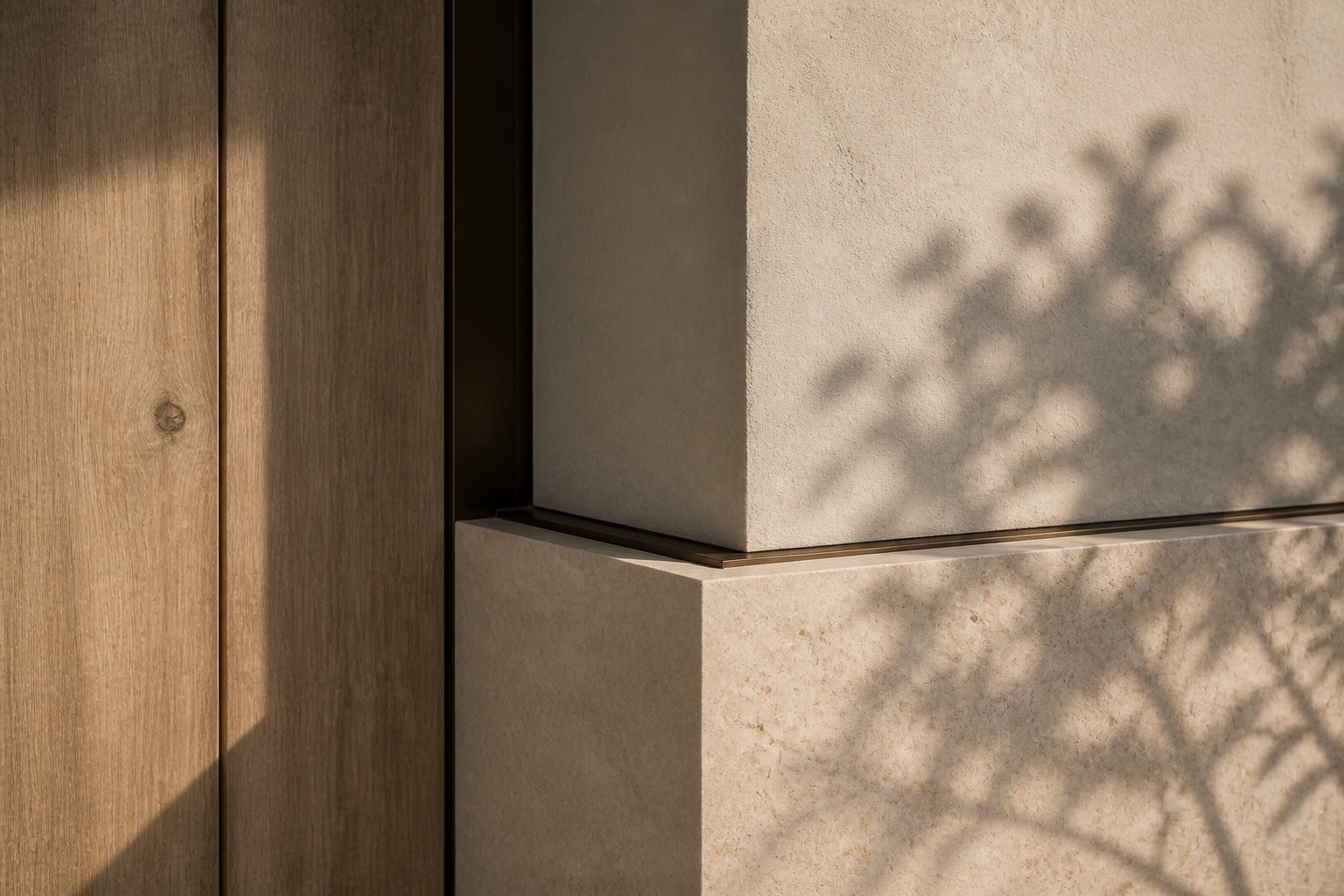
Materiality is the silent language of design. That is why we select each texture, colour and finish with a double criterion: aesthetic and emotional. We use noble materials, not for their symbolic value, but for their ability to age with dignity and transmit authenticity.
The furniture, whether custom-designed or curated by our team, responds to the character of the project: it can be sober or exuberant, linear or sculptural, depending on the spatial narrative we define with you. In this way, every detail – from a brass handle to a suspended lamp – becomes an extension of your identity.
Inspire your next home with a holistic vision
At Fernández Architecture we don’t just design homes; we create living spaces that are deeply connected to you, the place and the time you live in. If you are considering developing a residential project in Miami, we invite you to discover how a holistic vision of architecture and interior design can transform that idea into an authentic, functional and meaningful space.
We want to be with you every step of the way: from the first conversation to the moment you open the door to your new home. Write to us and let us know your vision. You are just one message away from starting to build a space that is truly yours.
Sorry, the comment form is closed at this time.